

15th century The Palazzo del Pretorio is a 15th century building with access from Via Marconi through a portal with a pointed arch in Angera Stone. The north side of the small courtyard is embellished by a portico with Angera Stone columns and capitals bearing shields and leaves. In the 18th century it was seat […]
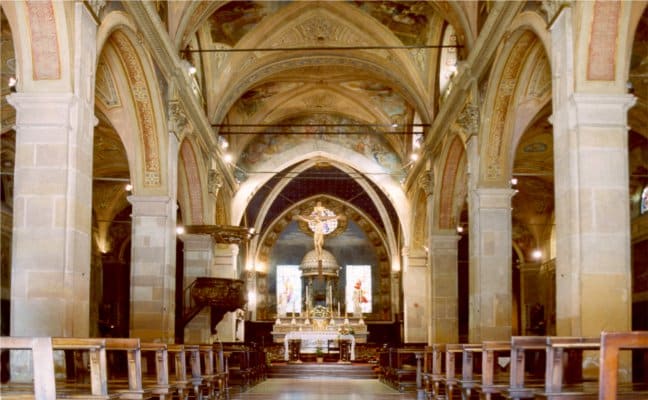
14th-20th century The parish church of Santa Maria Assunta is largely built of the pale-coloured Angera Stone which is characteristic of Angera’s principal monuments. The present building stands on a previous church dedicated to Santa Maria, extant since at least the 14th century. The current façade is the result of an early 20th century rebuild by the architect […]
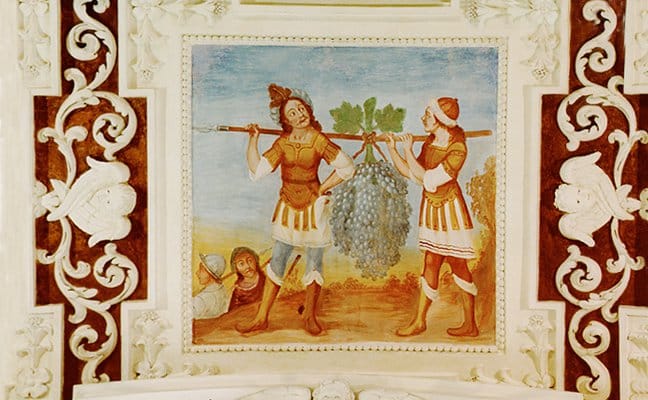
5th-17th century The church is dedicated to Sisinnio, Martirio and Alessandro, clerics and martyrs from Cappadocia sent at the end of the 4th century by Bishop Ambrogio of Milan to evangelize the Non Valley, in the Province ofTrento. The current edifice is the result of the rebuild between 1580 and 1585 of structures dating to the Early […]

14th century The ex-convent of Santa Caterina, martyr and virgin, was built in the 14th century as a hospital adjacent to the church of the same name. All that remains today is the exterior and some internal structures; the building now contains private dwellings. It is sited at the entrance to the town, at the junction of […]

From the old Pasqué, now Piazza Parrocchiale, starts the old Via di Mezzo, today called Via Mario Greppi after a victim of the Liberation shot in 1945 (and previously Via Vittorio Emanuele II). The road runs parallel to the lake shore, crossing the historic town centre; it corresponds to the ancient Mediolanum Verbannus, the road […]
19th- 20th century The building that overlooks the first square on Via Greppi was headquarters of the Società Anonima Maglificio Angerese, founded in 1894 by Teresina Piona and Amalia Forni, which gave employment to hundreds of workers, mostly women, and was an important important economic resource for the town’s inhabitants. The original factory site was […]
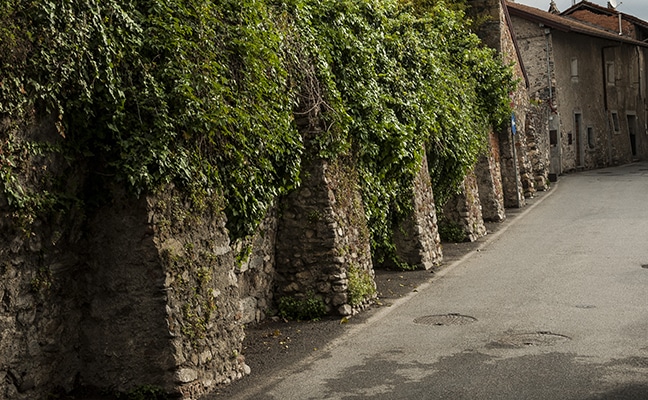
North of Via Achille Piazzi, dedicated to the young partisan shot in 1944, is the stretch of a mighty stone wall, which the locals call Barbacani. By this term we mean a medieval defensive structure, which served as a supporting work for a wall; despite repeated investigations in Angera, the perimeter walls of the village […]
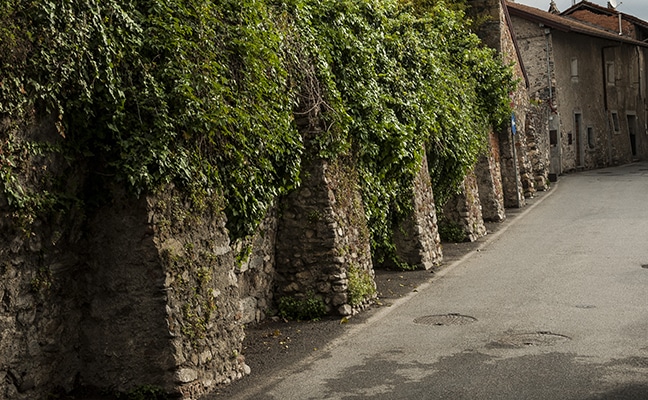
North of Via Achille Piazzi, named after a young partisan shot in 1944, runs a stretch of solid stone wall known to locals as the Barbacani (barbican). The term refers to a medieval defensive structure associated with a town’s fortifications. However, despite numerous investigations Angera’s town wall has never been found; a possible external ditch […]
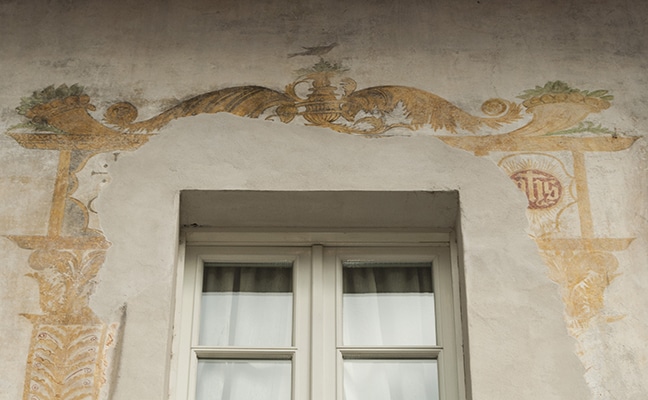
Late 14th-15th century Half-way along Via Greppi, proceeding from Piazza Parrocchiale, there is another square containing buildings of medieval origin and a bank. Nearby, on the north side, is Casa Forni. The building may be recognized by the 16th century frescoes that decorate one of the windows in the (recently restored) façade. During rebuilding work […]
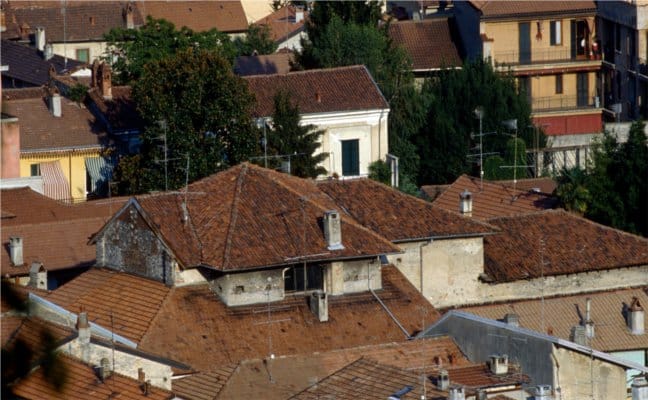
18th century On the left (south) side of Via Greppi, at the corner with Via Cavour (once Contrada delle Monache), stand the remains of the convent of Santa Teresa, now used as dwellings and shops. The architectural form may be clearly seen from above, from the gallery of the castle or Rocca. The Convent of Santa […]
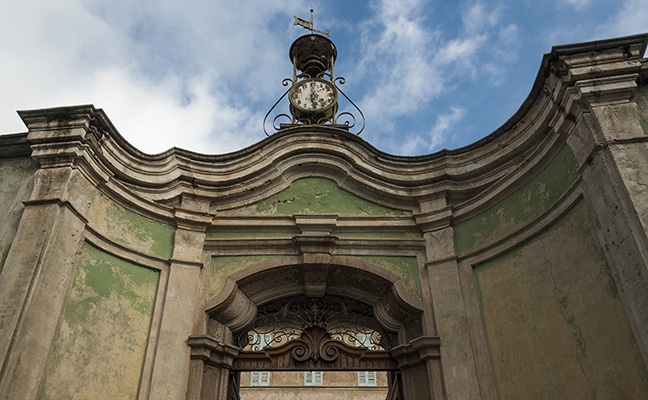
18th-19th century At the junction with Via Rocca, Via Mario Greppi is known as the Carrobbio: this term, typical of Lombardy, derives from the Latin quadrivium and means crossroads. In the 19th century it was the home of agricultural labourers who worked for the Palletta family, owners of the elegant villa at 110 Via Greppi. […]

13th-17th century Before reaching the lake, Via Mario Greppi touches the old quarter called da Muu or dell’Amore, where in the past Angera’s fishermen lived. Today the road is named after the young partisan Arturo Merzagora who was shot in 1944. At 1 Via Merzagora the façade of the old church of San Vittore is still […]
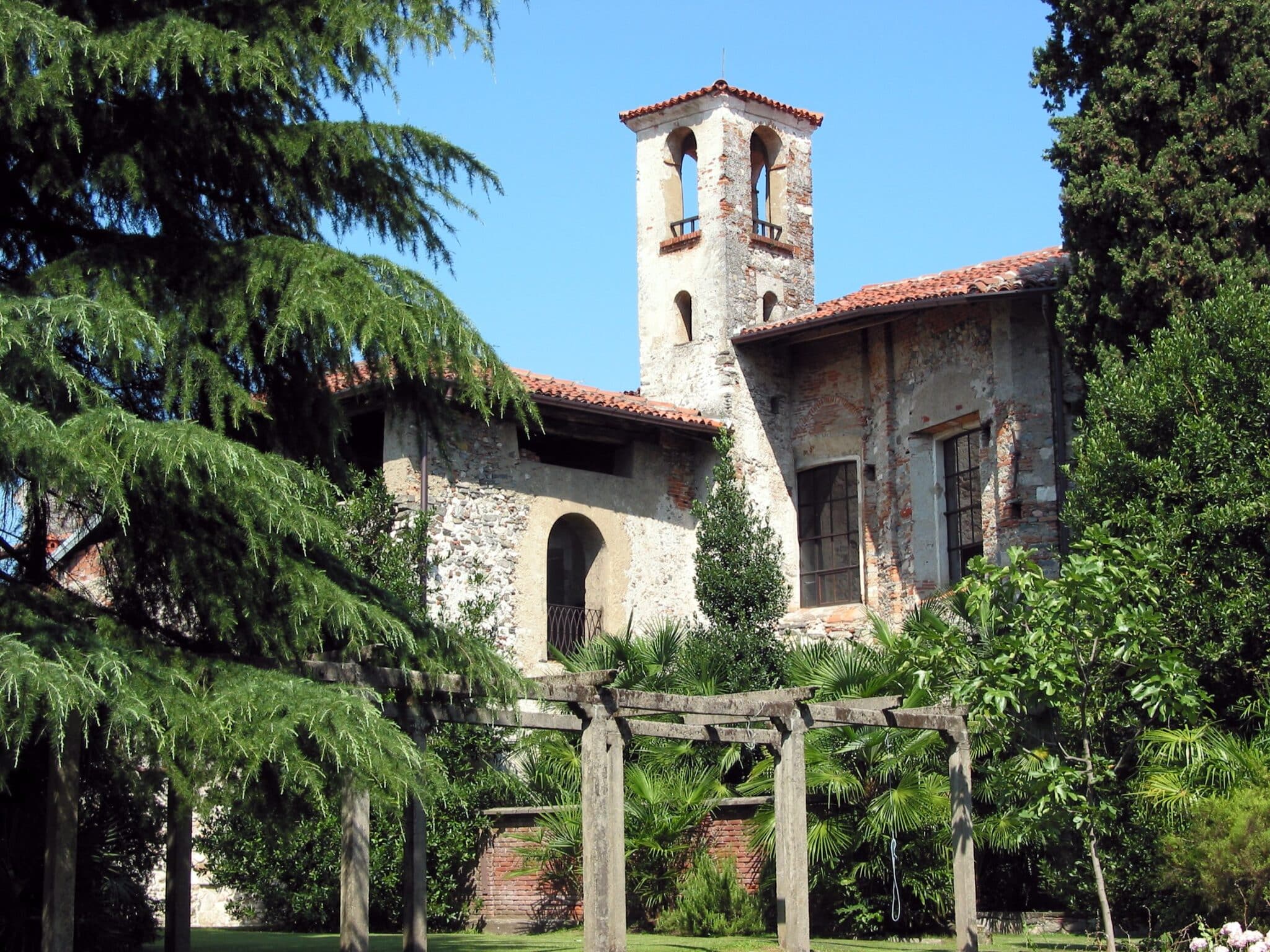
Site n. 11 of the Museo Diffuso XIII-XVII century Before reaching the lake, via Mario Greppi touches the ancient district called da Muu or dell’Amore, a neighborhood that in the past was the residence of Angerese fishermen. Today the street is dedicated to the young partisan Arturo Merzagora, shot in 1944. At number 1, the […]

19th century After the junction with Via Merzagora, the old Via di Mezzo takes the name of Via Carlo Ondoli in memory of Angera’s first hospital, established in a house donated by Carlo Ondoli in 1879. The entrance for motor vehicles to Villa Greppi is on this road. The building dates to the late 19th […]

The west side of the Rocca di Angera has been used since Roman times as a quarry for Angera Stone. This is a sedimentary rock, a dolomite, already employed for building 2,000 years ago, e.g. in the Roman theatre in Milan. Its use increased notably from 1200 onwards; in the 18th century the quarry was […]
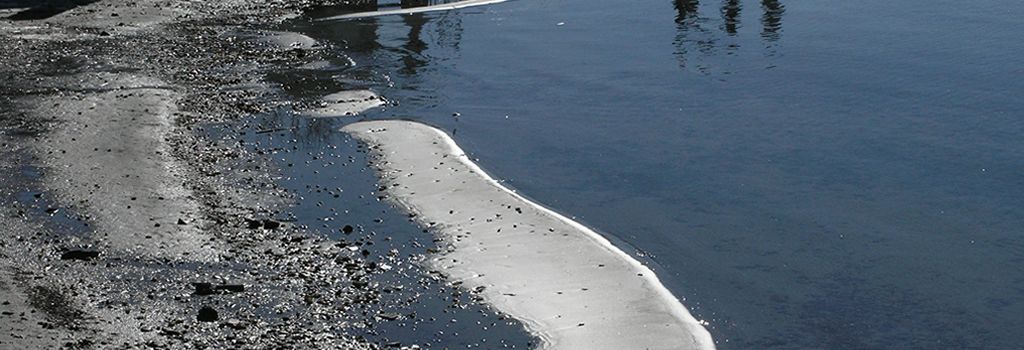
The beach of La Nocciola (the hazelnut) is a large area with a partly shaded lawn, and is located a little further north. It is a ‘wilder’ environment and dogs are permitted. Access is via a rather steep path and the beach is not equipped with any services.
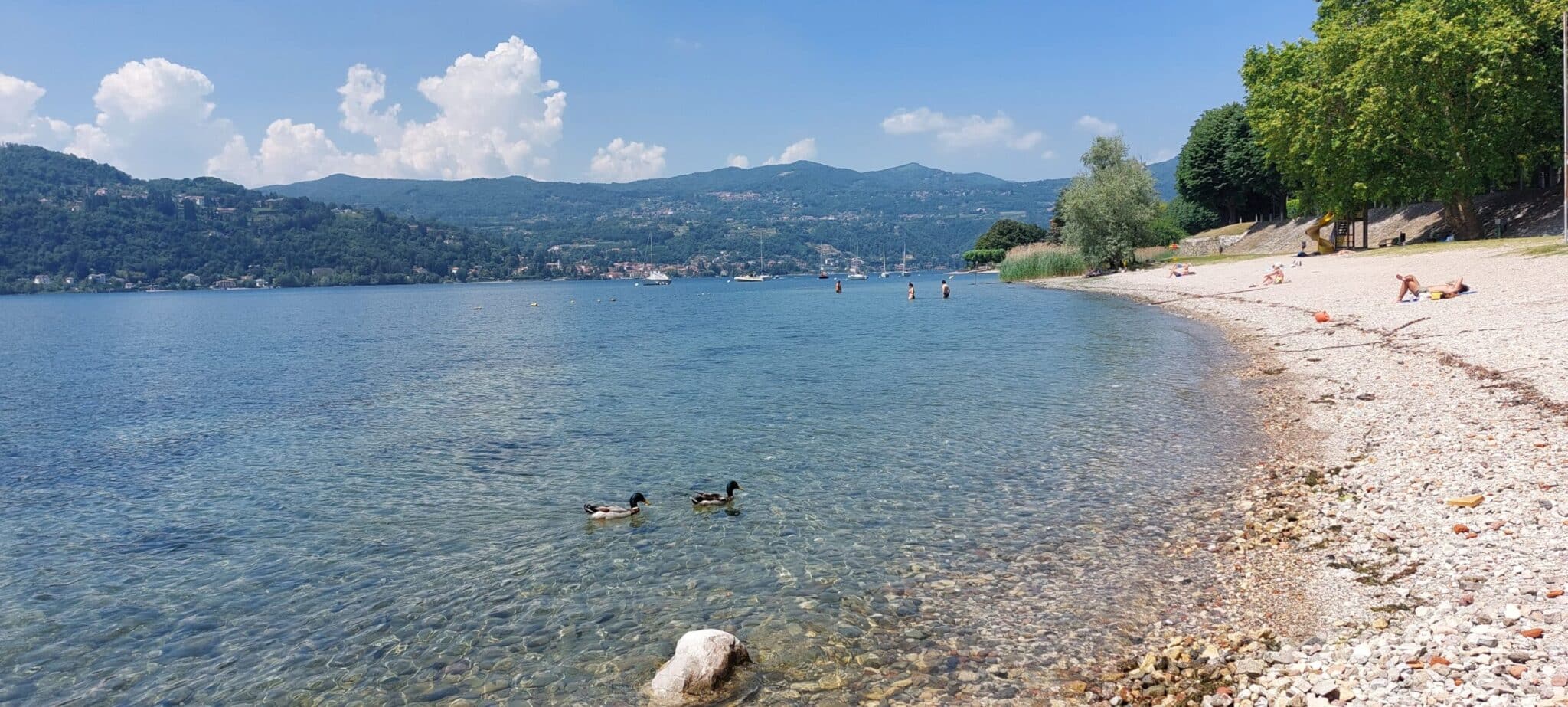
Site n. 14 of the Museo Diffuso. in recent years the waters of Angera have always received the blue flag. The City offers two free areas of beach where it is possible to access to the bathing area. La Noce: The Noce beach, characterized by sand and gravel, takes its name from the large tree […]
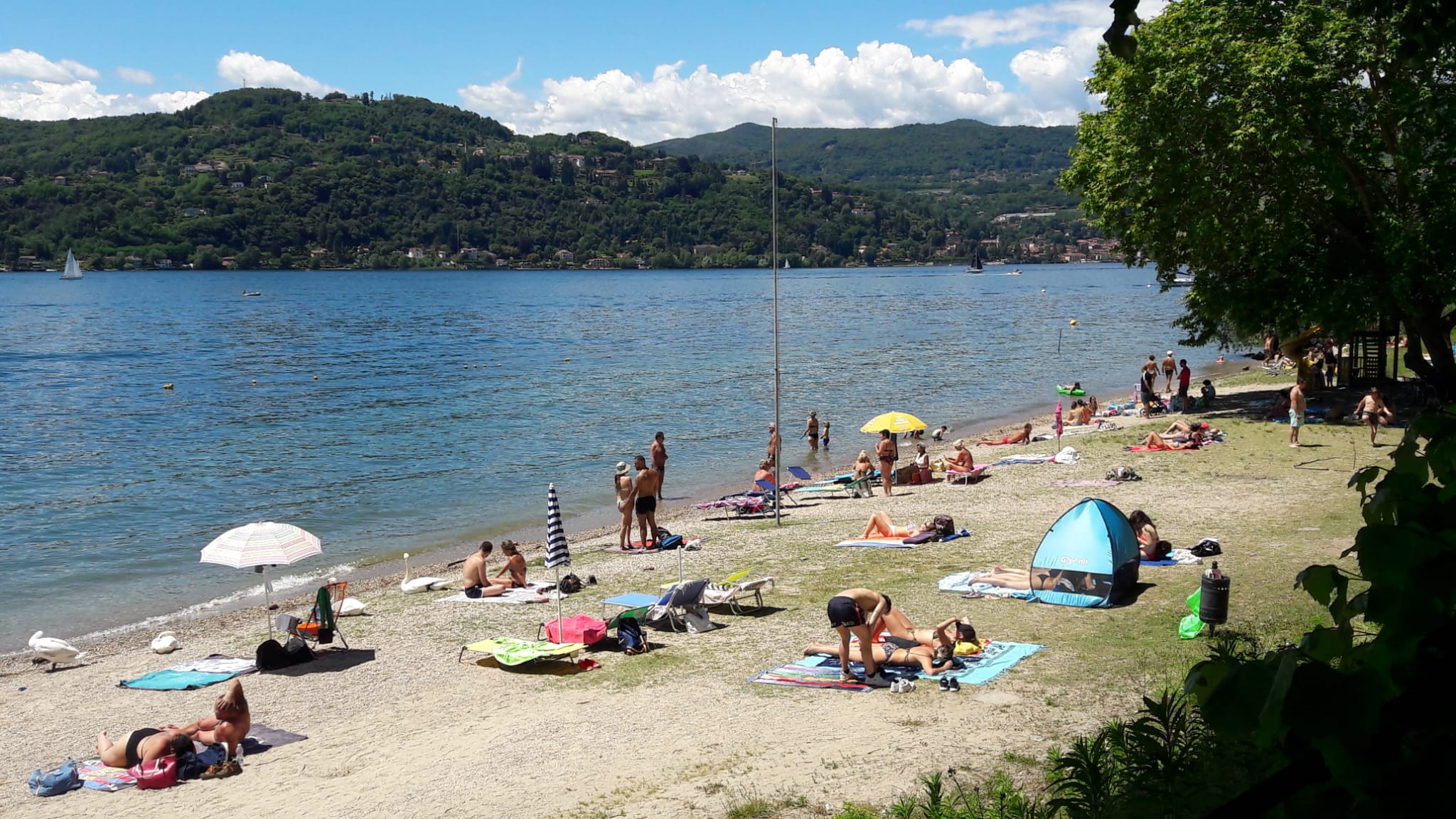
The beach of La Noce characterized by sand and gravel, takes its name from the large walnut tree that is located in the centre of the beach and offers shade and coolness until well past midday. The beach is accessible via an asphalt path that leads to the sandy area which has a ramp for […]

1922 The War Memorial dominates the part of the shore that juts out into the lake; it is made of granite and portrays an infantryman on lookout. The sculpture was made by the Turin artist Giacomo Giorgis and was finished on 20th September 1922. It commemorates the 83 Angeran citizens who perished in the Great […]
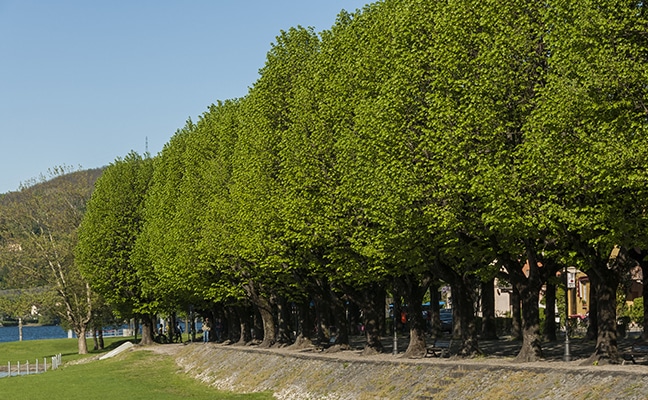
The part of the public gardens which extends from the Austrian Port to the landing stage is embellished with lime trees almost a century old, which Angera fisherman used to hang their nets from to dry them in the sun and make repairs.
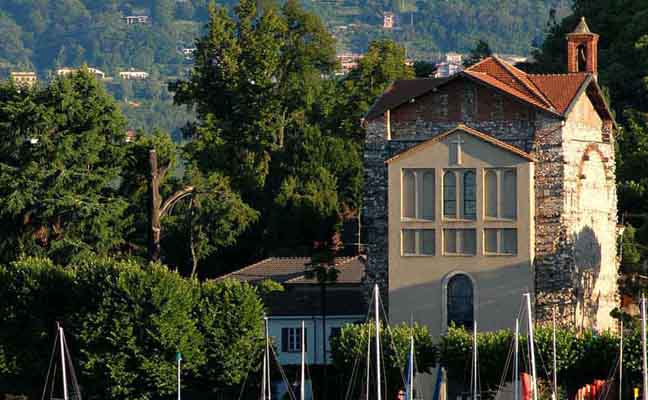
17th-20th century “In 1657 on the 27th June occurred the miracle of sweating blood, which appeared on the forehead of the Blessed Virgin that stood above the side wall of the door of Casa Berna. So, as is their custom, the women of Angera had made a garland of flowers for this effigy. And a woman who, […]
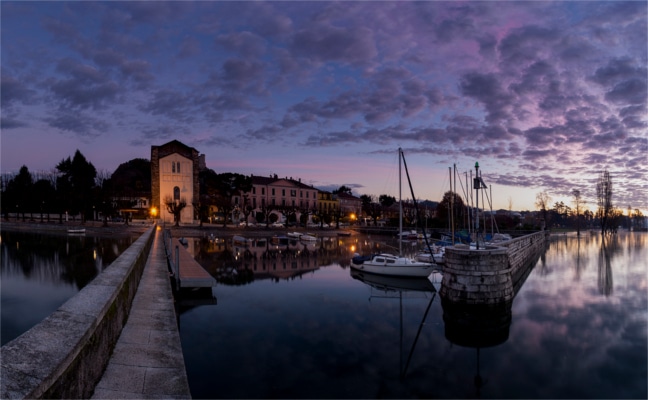
1819 For more than 2,000 years Angera has owed its development to the fact that it overlooks a natural gulf protected from the winds thanks to the Rocca hill and the San Quirico hill. The natural port was at the centre of the river-lake routes that connected Europe to the Adriatic Sea, through the Po, […]
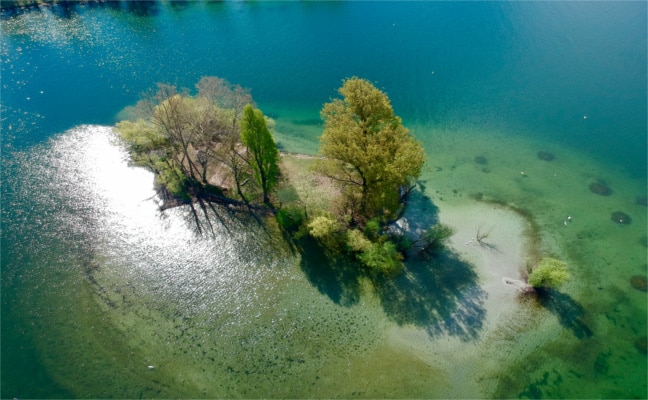
Isolino Partegora, covered only by poplars and surrounded by reeds, is an isle in the middle of the small bay (known in the past as “gora”). It cannot be visited but it is possible to admire it from the lakefront or along the side of the Bruschera Oasis. Once it was called Isolino Crivelli after […]

19th century Palazzo Borromeo is a Neoclassical building of sober and elegant lines; the central portion bears a triangular pediment and on the first floor there is a long balcony held up by lions’ heads. On the façade is a plaque placed there in 1882 by the local Workers’ Association in memory of Garibaldi’s sojourn […]
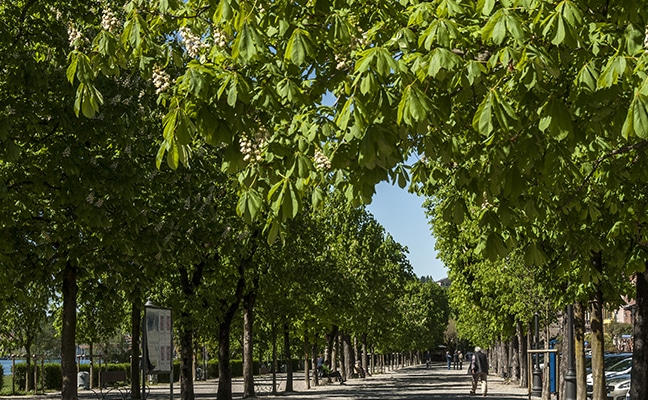
1820 Angera’s southern waterfront is of 19th century design. The shore was filled in, creating the suggestive lawns that give the town an appearance not found elsewhere in the lake. In 1820 the pedestrian promenade was also added; originally it had three rows of horse-chestnut trees, reduced to two in 1914 when the Angera-Varese tramline […]

14th-15th century The residence at 8 Via Visconti still displays an arched brick entrance (now closed off) surmounted by a circular shield bearing the serpent of the Visconti family. Beside survives a fine mullioned window with a capital decorated with the Visconti coat of arms, flanked by two heads. It has been suggested that this […]

1893 The Palazzo Comunale was built in 1893 as a school; since the 1960s it has been seat of the council offices. The façade commemorates some important local personages. In 1899 a memorial stone was dedicated to Giuseppe Ferrari, distinguished politician and thinker, and Felice Cavallotti, illustrious citizen and ardent defender of political morality. On […]
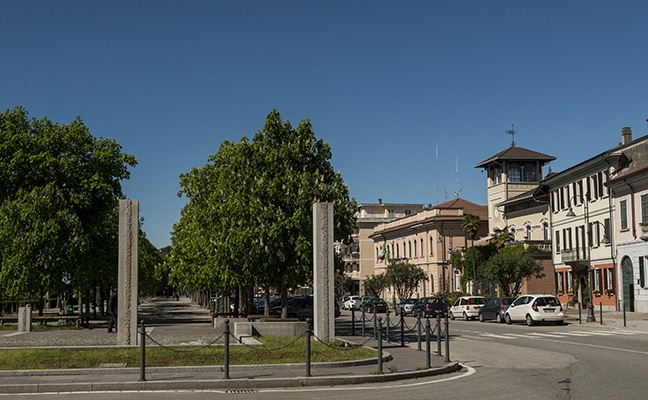
The large square between the modern fountain and the Madonna della Riva Sanctuary has had various names over the centuries. Known as Piazza del Lago in 1770, it was then named after Ferdinando I; after Italy was united it was called Piazza della Riva, Piazza del Lago and Piazza Stazzona; since 1883 it has been […]
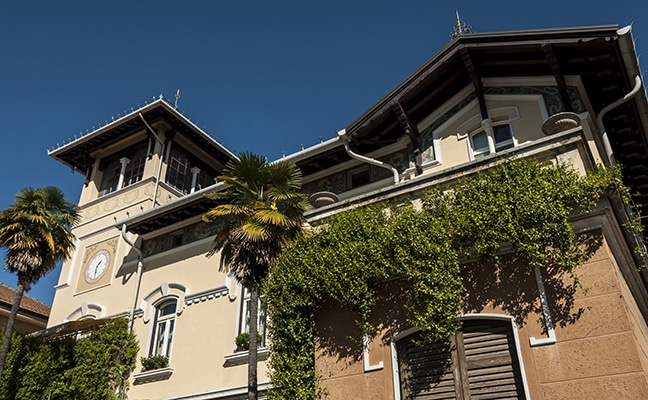
20th century The villa is one of the local examples of Liberty-style architecture, which spread in the Varese area from the early 20th century onwards. Notable decorative features are the small tower, and floral paintings and frescos in interior rooms. Today the building is an art gallery, used especially for exhibitions of contemporary painters’ work.
1st-3rd century AD During excavations conducted in 2005 at the corner between Via Mazzini and Via San Martino (in the area where the Rossi Distillery stood) interesting Roman remains were found. These include part of a 1st century AD road, which may be seen inside a garage. The southern portion, with a regular cobbled surface, […]
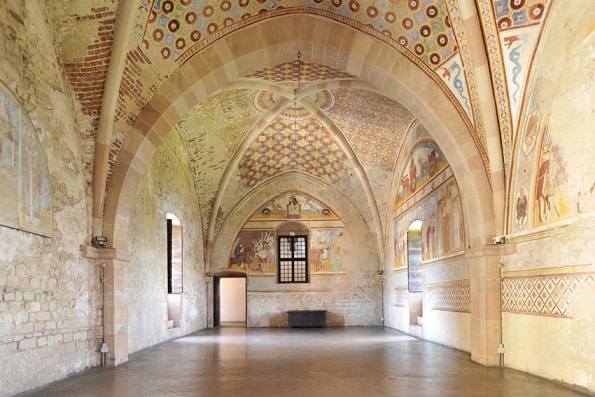
The Rocca di Angera rises majestically on a spur of rock that dominates the southern shore of Lake Maggiore. In a strategic position for traffic control, it was the property of the Visconti family, originally from the Verbano area, and in 1449 it was bought by the Borromeo family, to which it still belongs today. […]
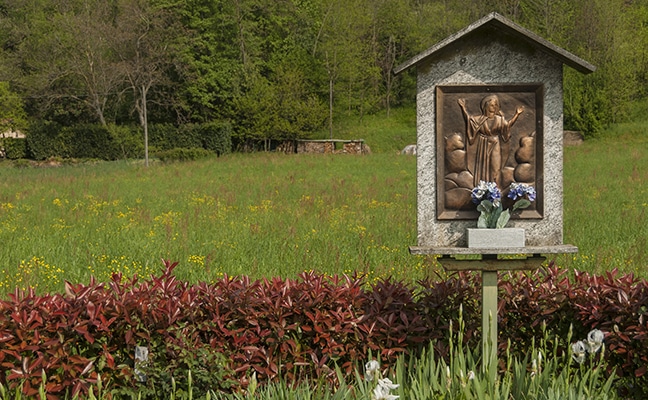
In times past the road between Angera and Ranco did not run along the lakeside, but a little further inland. This old road offers a stroll through farms, woods, vineyards and villas with splendid views of the lake. When you arrive you can admire the beautiful and fascinating old village of Ranco and return to […]
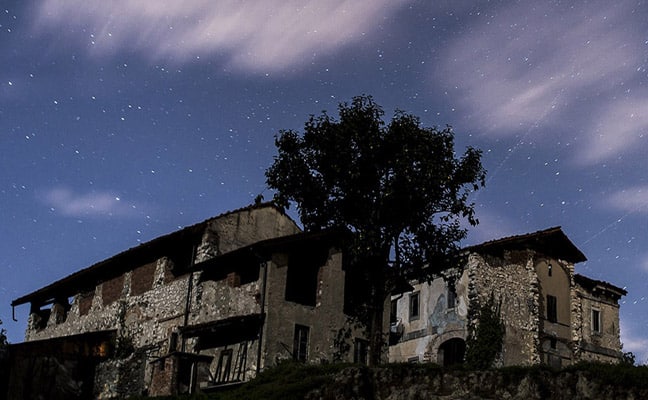
17th century Cascina Monastero owes its name to a religious foundation established by Cardinal Federico Borromeo. On 25th July 1625 work was begun on the construction of a monastery for the Barefoot Carmelite nuns, who livered a cloistered existence devoted mainly to contemplative prayer. The monastery was soon sold and became a farmhouse. The walls […]
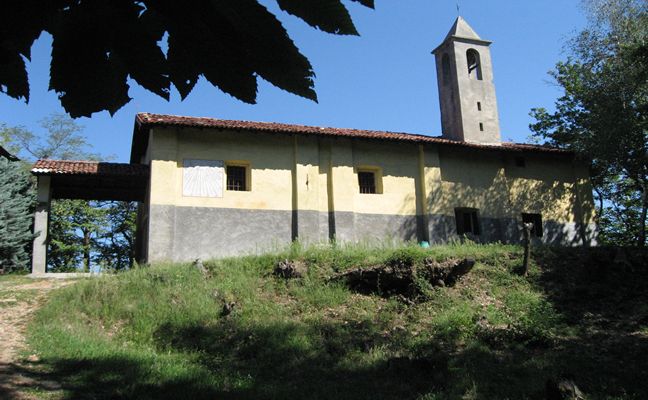
13th-20th century The church of San Quirico, which stands on top of the hill named after it, is of ancient foundation; the first document referring to it dates from the early years of the 13th century. The church has undoubtedly several construction phases; the oldest part is the apse, and the building was completed in later centuries. […]
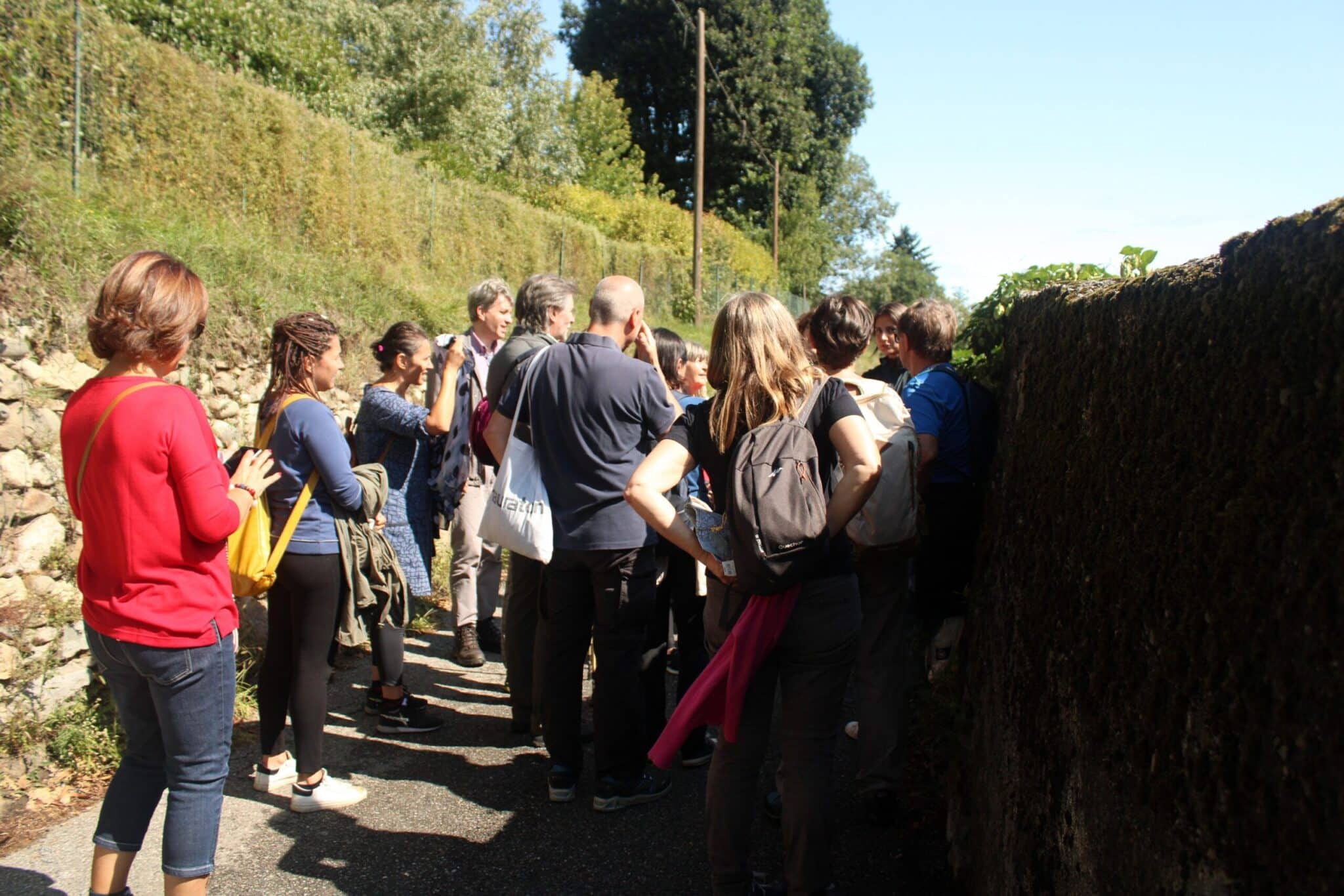
The old Via Valcastellana still preserves some stretches finished with river cobbles, once known as ‘Lombardy build’. This road-surfacing technique has been used since the Roman period and demonstrates the antiquity of the road, which connects the town with the farmhouses on San Quirico Hill and the Ronchi, with its terraced vine cultivations that are […]
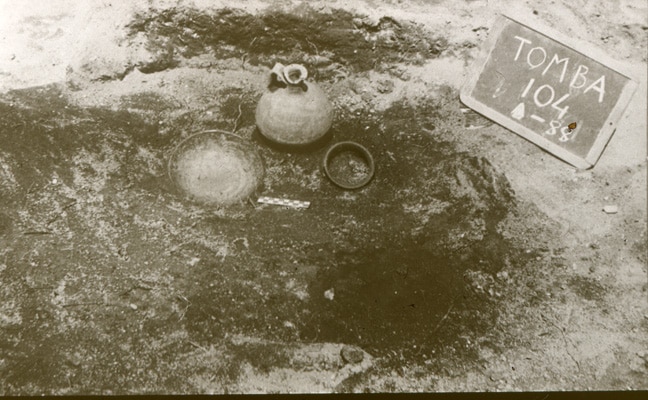
The Napoleonic and Austrian laws according to which cemeteries were to be moved to areas outside settlements were put into effect after the unification of Italy. The local surveyors and geologists decided to site in Bocca dei Cavalli locality the Civic Cemetery of Angera that was established in 1877. This new burial ground took the […]
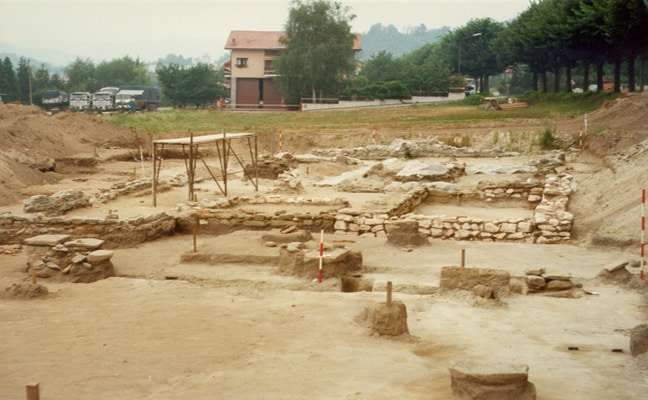
3rd-6th century AD Excavations conducted between 1981 and 1984 revealed that the area has been inhabited since at least the 1st century AD and brought to light the remains of a rural building dating to the 3rd century AD. The construction comprised a residential area next to a productive area with a courtyard. The building […]
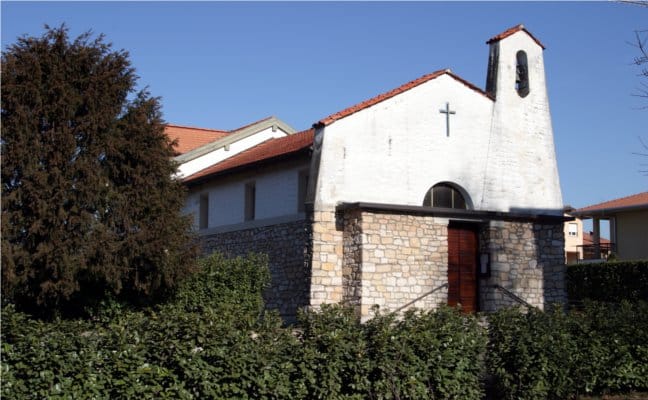
1952 The Church of the Sacra Famiglia was built in the village of Bruschera di Angera in 1952.
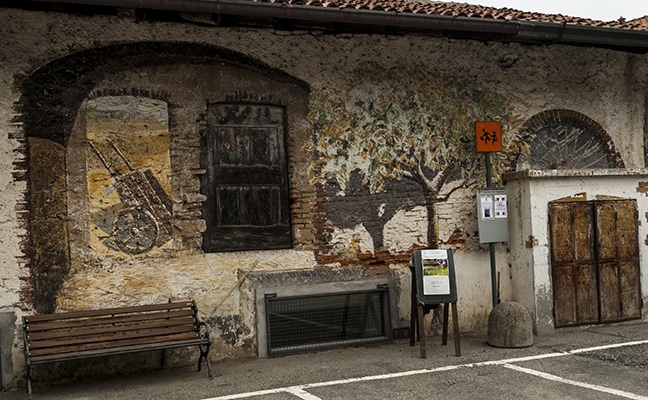
The piazza, now surrounded by old buildings with backyards and farms, is at the centre of the outlying village of Capronno. This locality may have been the site of a Roman farmhouse, as suggested by a number of interesting archaeological finds. Several tombs and the remains of buildings in Castellaccio locality show that the area […]

11th-19th century The Church of Saint Mary Magdalene in Capronno stands on a hill overlooking the hamlet. The present building incorporates an older church dedicated to Santa Maria. The bell-tower was included in the façade in the older structure; it is Romanesque in style (11th century) and was made with re-used pieces of worked stone, such as […]
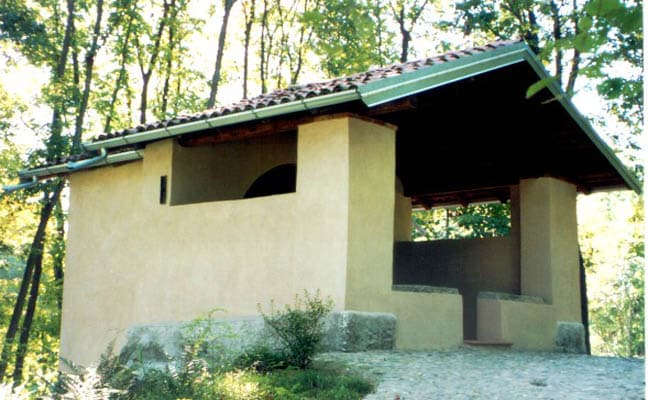
The Chapel of Saint Ambrose stands only a few metres away from the road leading from Capronno to Cadrezzate and Lentate. In plan, this small chapel is composed of two chambers divided by a doorway with a round arch: the apse and the porch. The end wall is decorated with a fresco depicting a Sacra […]
The summit of the hill that overlooks Capronno is referred to in old documents as castello or castellaccio (castle). No remains are visible now in this wooded area, but 1970 during agricultural work, the remains of walls, pottery and brick/tiles of Roman and Lombard epoch were unearthed. The dominant position and shape of the land […]

11th century bell-tower, 18th- 20th century church A church dedicated to Saint Quiricus in Barzora locality is documented in the late 13th century; this was perhaps the church of Barzola in the parish of Angera which since the 16th century has been dedicated to Saints Cosmas and Damian. The slender, elegant bell-tower seems to be part of the original building […]

(1889 – 1914) Hospital for the poor established in 1889 after kindly entrepreneur Carlo Ondoli bequeathed his house for the purpose, and directed by the doctor Luigi Pigorini. In 1914 the hospital was transferred to its current location in Via Bordini and the original building passed into private owners. Angera has a long-standing tradition of […]
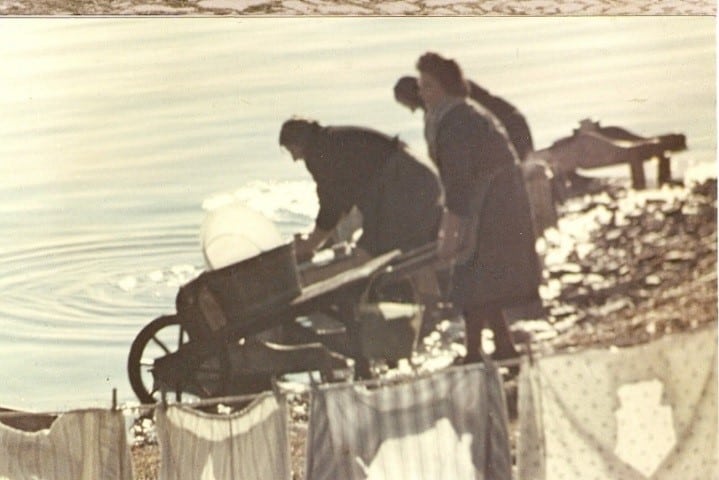
An old street in the fishermen’s quarter, traditionally known as Via da ‘Muu (Street of Love), where the inhabitants of Angera were accustomed to exchange promises of eternal love. Contrada d’Amore or Via da ‘Muu is the name that local people usually gave to the road that joined one side of the Tigli dei Pescatori […]
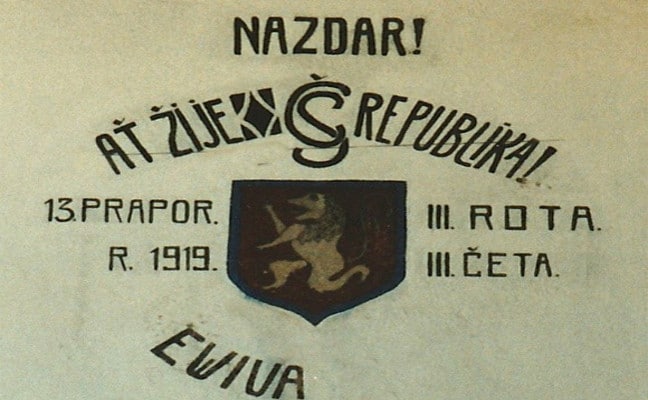
1919 Angera remembers the Czechoslovakian soldiers who fought alongside Italian troops during World War I and were stationed in the Corte dei Cardana. Via Paletta is home to the Corte dei Cardana, also called curt da bass (lower courtyard), to distinguish it from the curt da sura (upper courtyard) situated in what is now Via […]

(2016) Reproduction of the painting Boy with a Basket of Fruit by Caravaggio (1571-1610) using the ‘spray colours’ technique, produced by the artist Andrea RAVO Mattoni for the Angera September 2016 festival, as part of his project Una Pinacoteca a cielo aperto (An Open-air Art Gallery). The work was funded by the Tedeschi family and […]
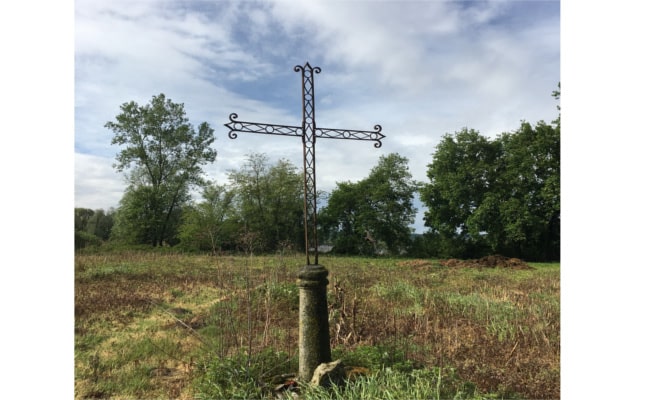
(18th century) This wrought iron cross was erected in memory of those who died in past epidemics. Until the 1950s the cross was decorated with flowers and blessed during a religious procession. The area called Prà di Oss (after which the road Via Prato delle Ossa is named) lies outside the town wall, at […]
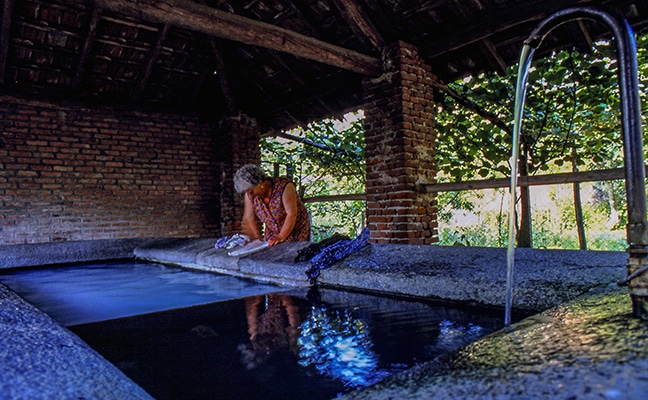
(Early 20th century) This public washing place commemorates the immense amount of hard work carried out by the women who washed clothes in such facilities or in rivers until the 1960s, breaking the ice in winter and short of water in the summer. The washhouse is rectangular and built in brick; it measures 6.82 x […]
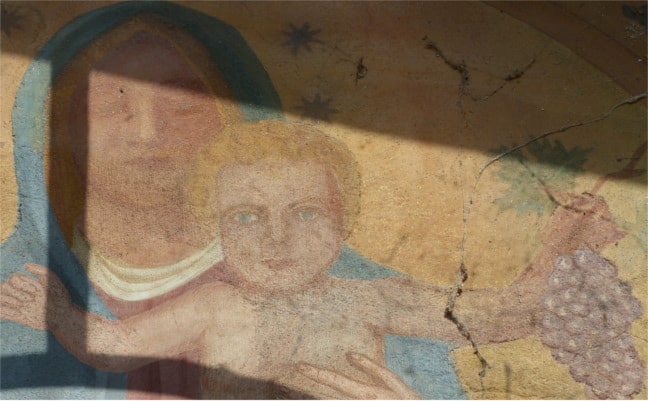
20th century The shrine stands on the old road to Ranco just after the junction with Via Bologna, in a part of the town known as Altinada, in an area once occupied by the church of San Cassiano. Important archaeological discoveries have been made in this zone, such as the burial urn of Calventia Virilliena on display […]
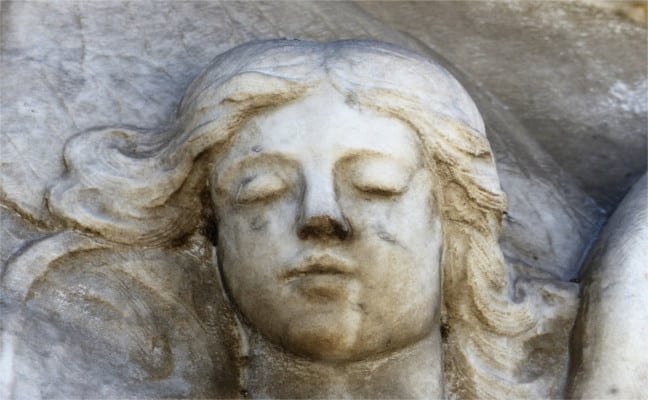
19th century The beautifully carved slab, probably of late 19th century date, shows St Michael, winged, dressed in a short light tunic and ankle-length footwear with open toes; he holds the spear firmly in his hands with the point downwards, destined to pierce the winged dragon that the archangel holds firmly under his right foot. The sculptural […]
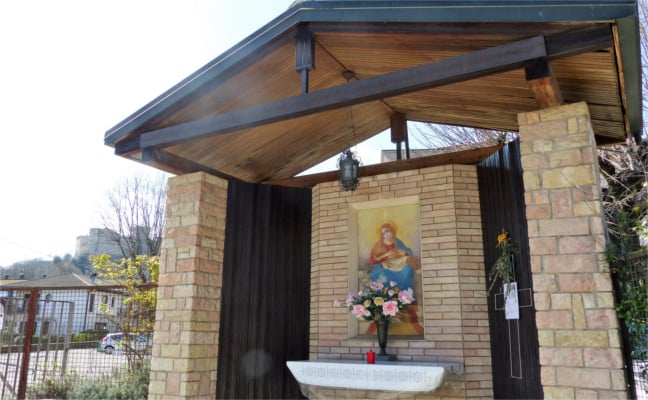
1961 An old chapel dedicated to the Madonna della Pace is recorded on this site from 1579; the main processions recorded in the Capitular Diary passed here, in particular those that went from Angera to Ranco and back, along the Vigane and the old road to Ranco. It was demolished in about 1950 and in […]

18th – 19th century The chapel stands in the area of the old 1786 Capronno graveyard, replaced by the present one in 1858. It was perhaps originally a cemetery chapel dedicated to plague victims or to San Rocco, protector against pestilences. Inside there is a modern painting of the Crucifixion with Mary and St Rocco recognizable by […]

Head of young woman, known as La Scapiliata, from a work by Leonardo da Vinci, painted on occasion of the 500th anniversary of his death. Andrea Ravo Mattoni, 2019, spray paint on PVC canvas, 1.5 x 1 m. The work chosen by the artist for this homage to Da Vinci is that known as the Scapiliata, a […]

Painting showing the face St Anthony. Andrea Ravo Mattoni, 2019, spray paint on PVC canvas, 2 x 1.5 m. The original work belongs to the parish and is not open to the public; it comes from the church of Sant’Antonio Abate, which was in Via Paletta but was deconsecrated and partly demolished in the latter half of […]
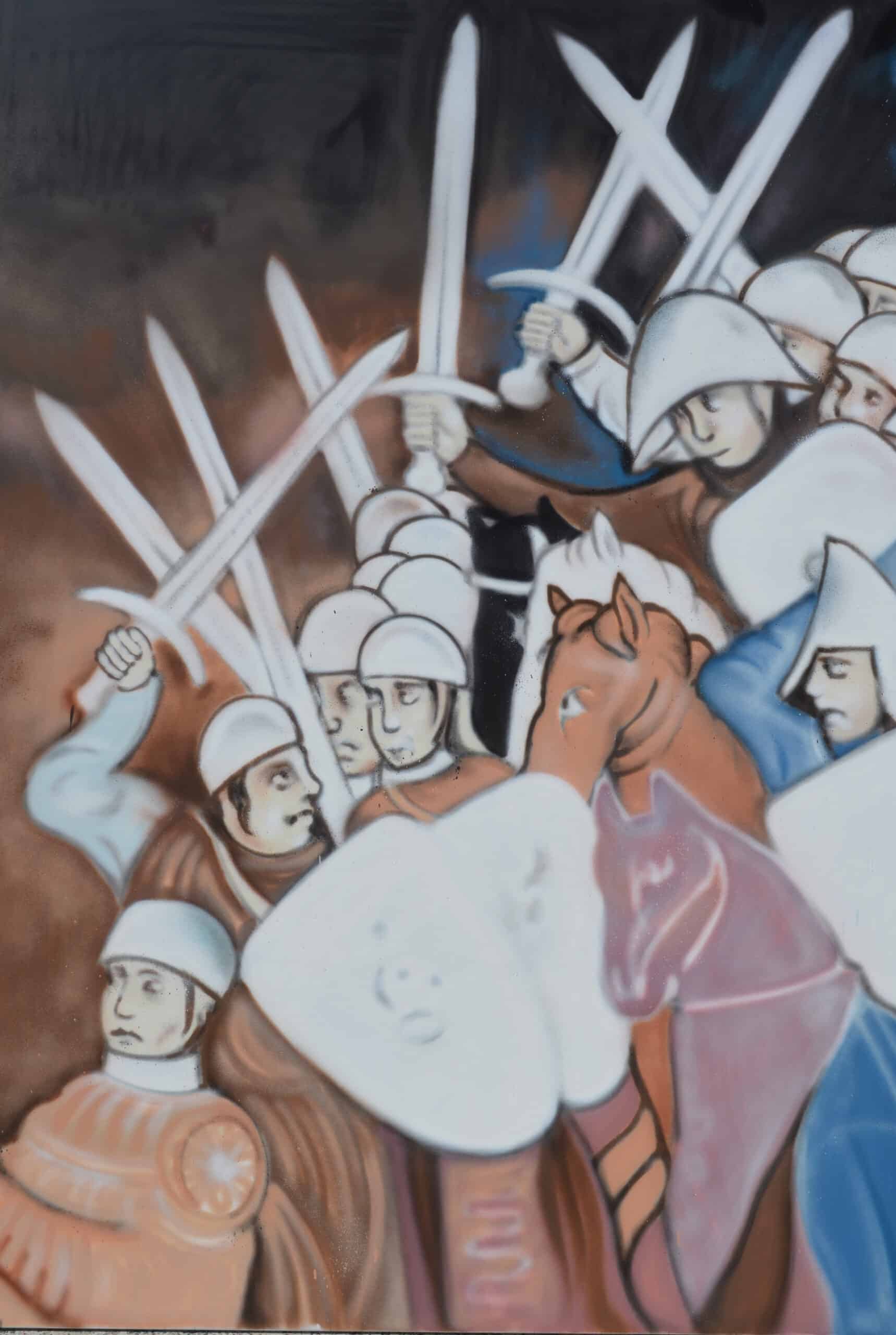
Detail showing Napo Torriani begging for mercy to Bishop Ottone Visconti, from the wall paintings in the Hall of Justice, Angera Castle. The room was decorated by an anonymous Angera painter in the late 13th – early 14th century. Andrea Ravo Mattoni, 2019, spray paint on PVC canvas, 2 x 1.5 m. The Sala di Giustizia paintings […]
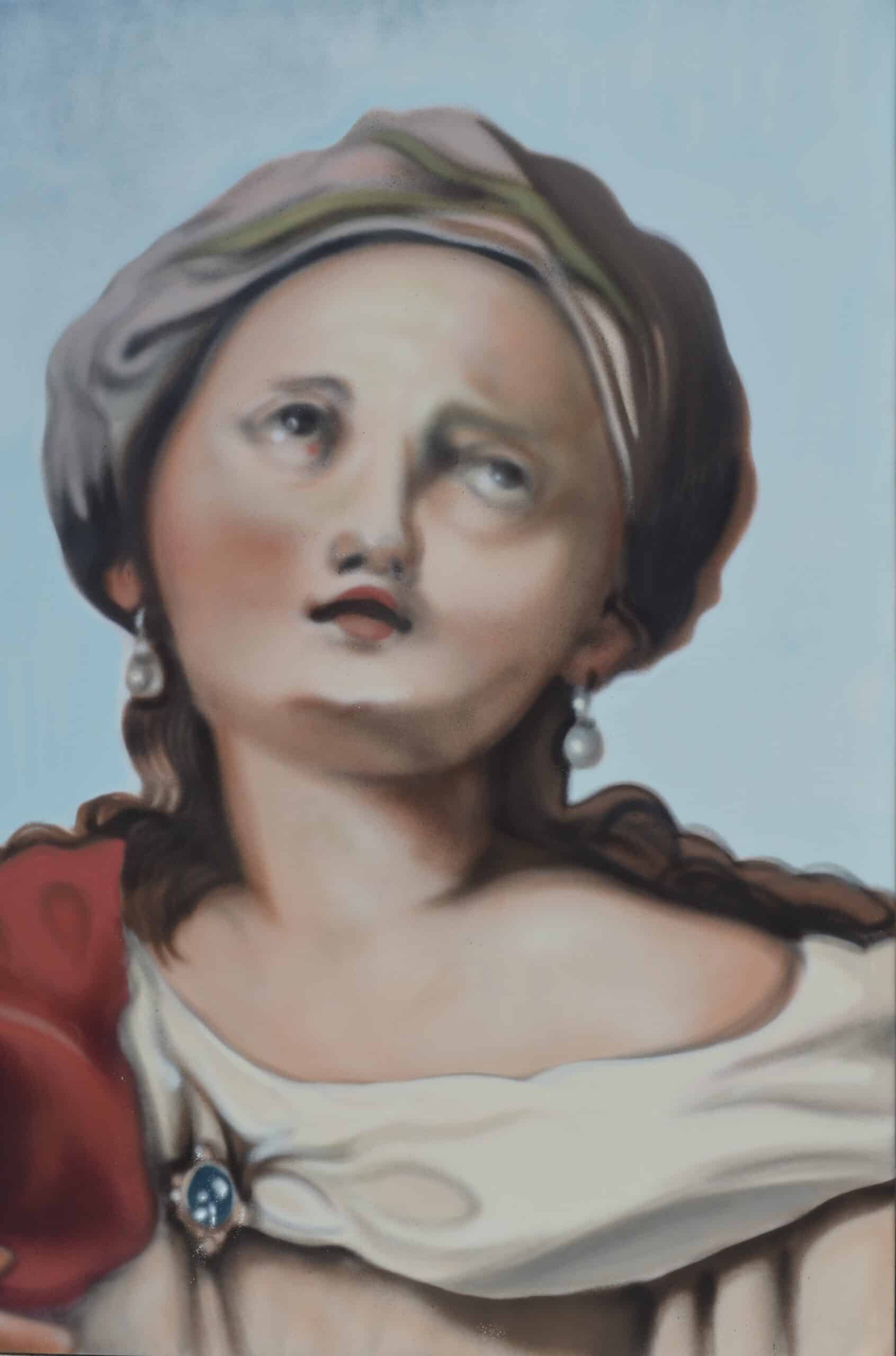
Painting on canvas showing the face of Santa Liberata. Andrea Ravo Mattoni, 2019, spray paint on PVC canvas, 2 x 1.5 m. The original work belongs to the parish and is not open to the public; it comes from the church of Santa Liberata in Via Lombardia which was deconsecrated and became private property in the 19th […]
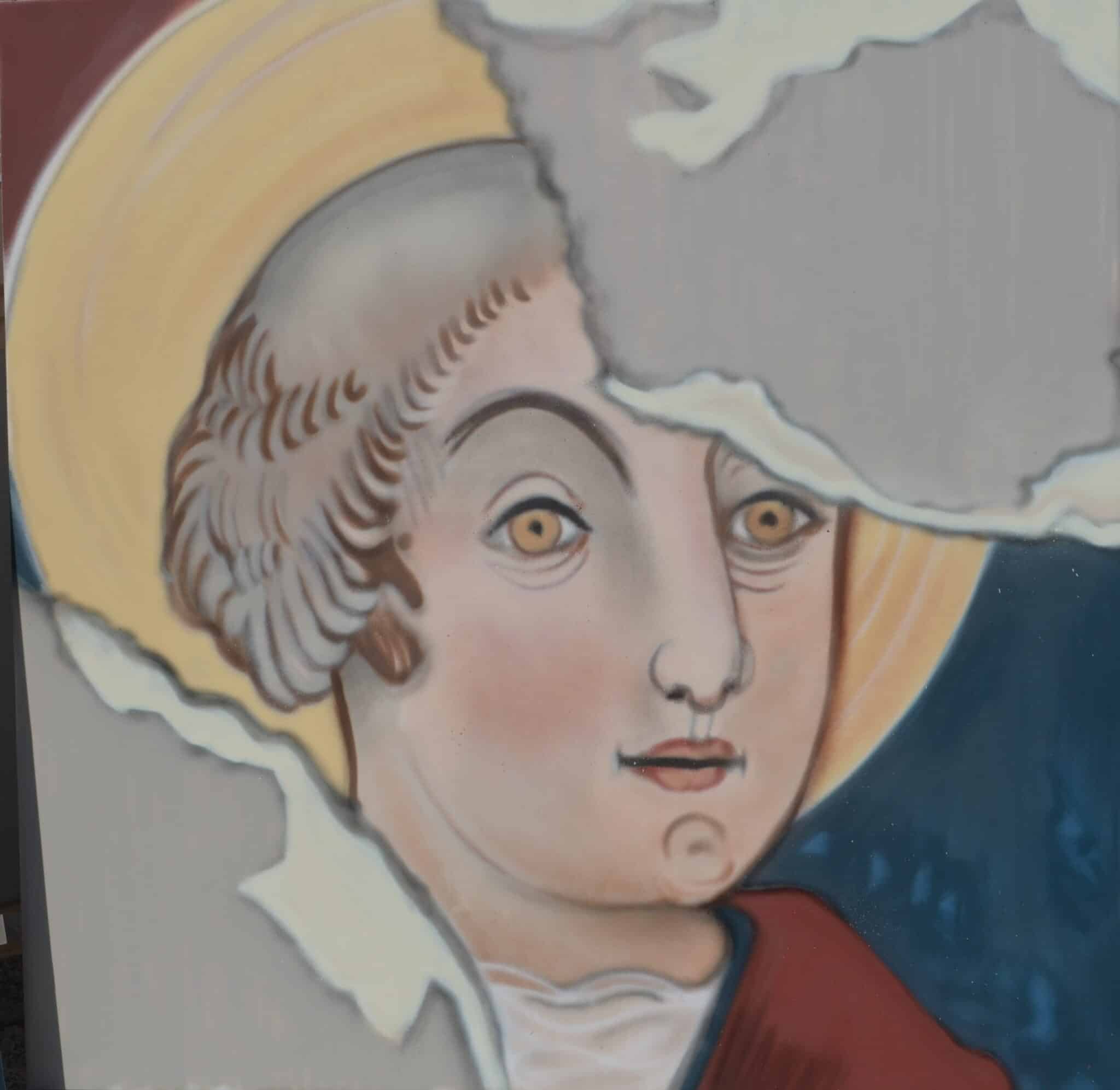
Detail of face attributed to San Quirico, from the wall paintings discovered in 1993 in the sacristy of the church of Santa Maria Maddalena e Ambrogio in Capronno. Andrea Ravo Mattoni, 2019, spray paint on PVC canvas, 1.5 x 1.5 m.The church was founded in the 11th century and has undergone several rebuilds. The earliest wall […]
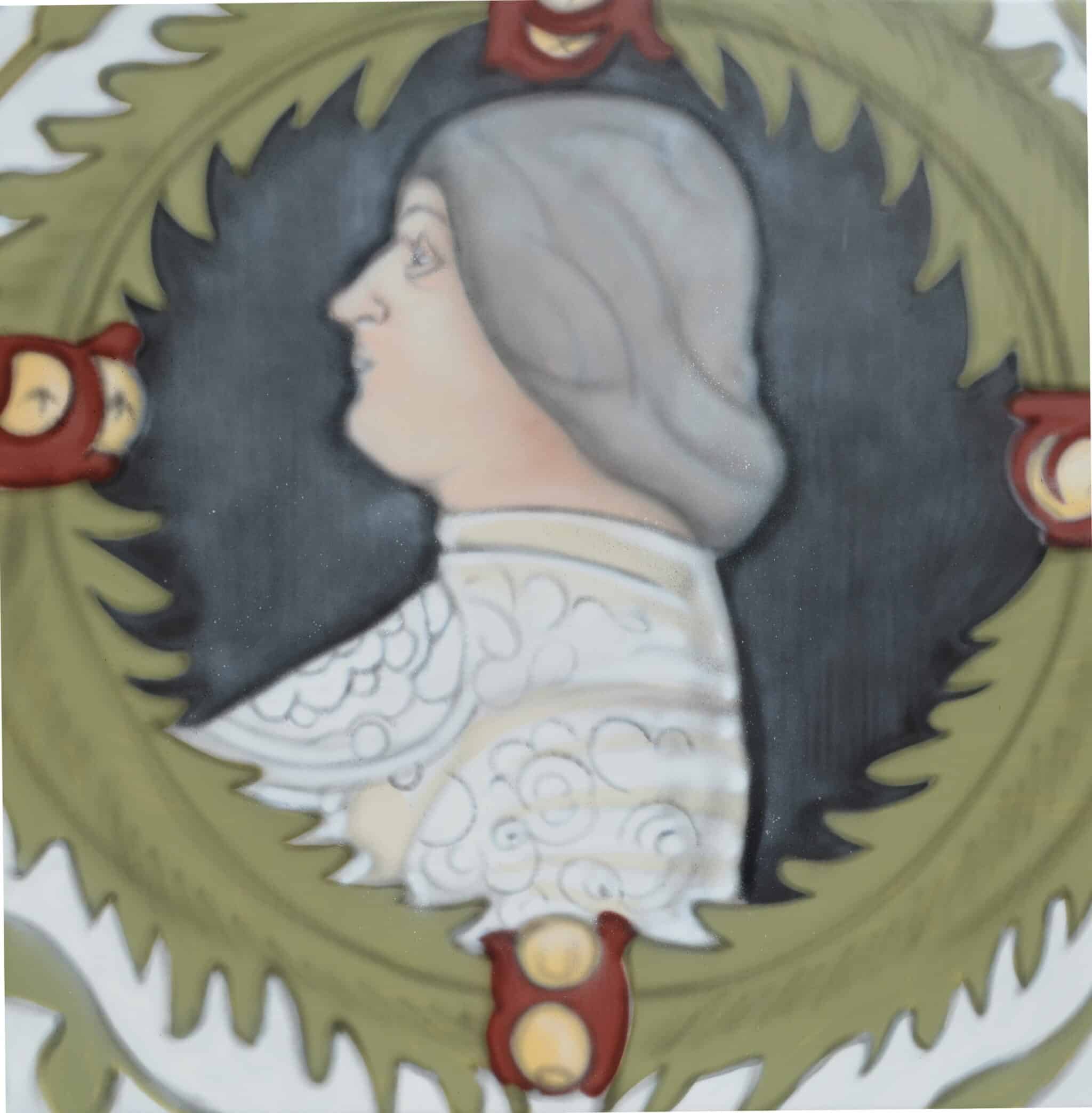
Detail of wall painting from the House of Forni with a portrait of Ludovico Maria Sforza (Il Moro) in armour surrounded by a garland. Andrea Ravo Mattoni, 2019, spray paint on PVC canvas, 1.3 x 1.3 m. The painting was recently rediscovered and restored during rebuilding work in the House of Forni, in Via Greppi; it is […]
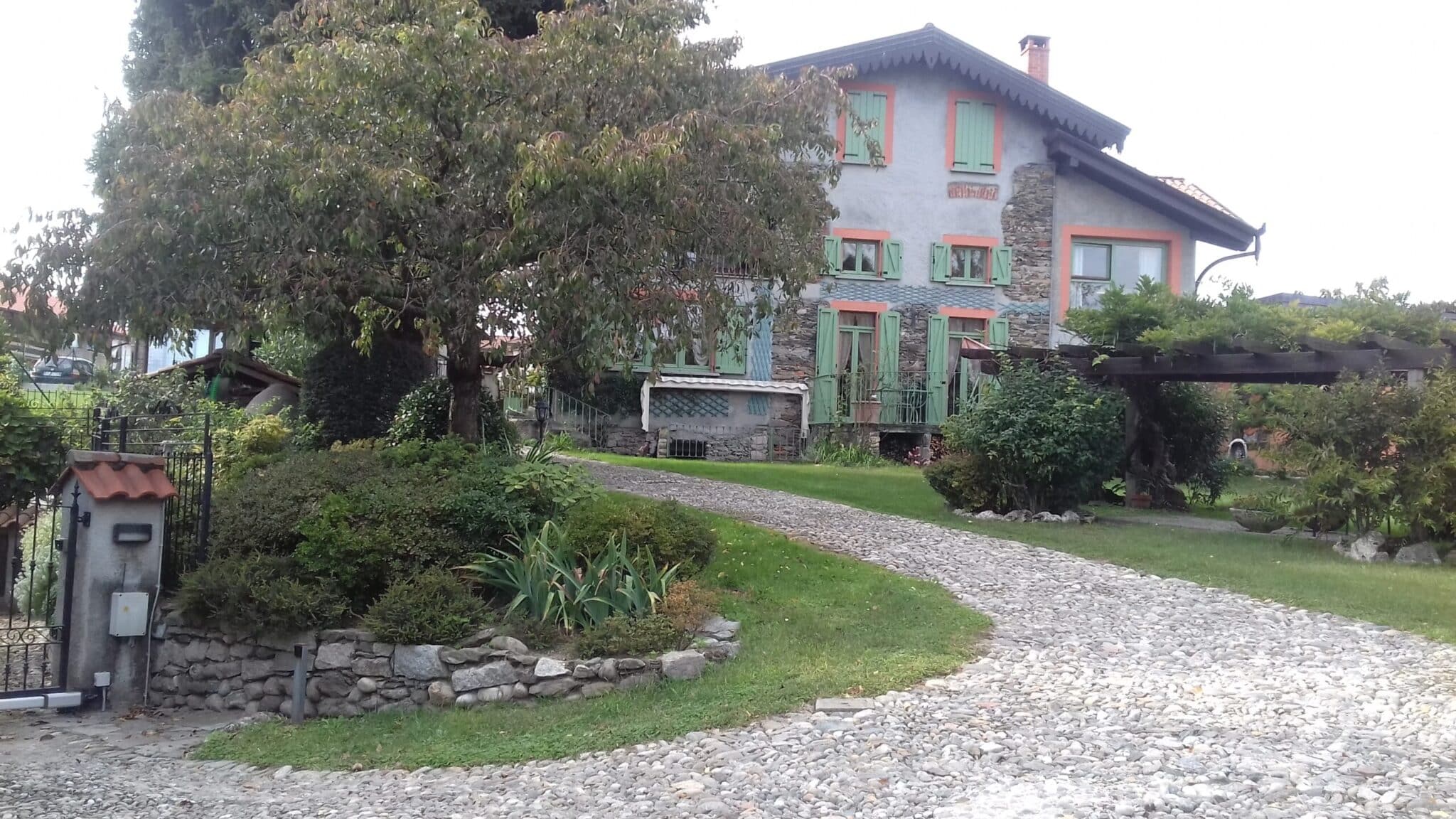
The ancient farmhouse, already documented on cadastral maps dating to the mid-19th century, hosts the headquarters of the Compagnia Roggero, a national excellence in puppetry, active in the production of hand-made puppets and marionettes. In 1990, during the renovation of one of the rooms of the farmhouse, numerous cocoons came to light under a layer […]